
Building the Talent Pipeline
Higher Education Meets Sioux Falls’ Workforce Needs
A patient waits for care. A manufacturer delays production because it can’t fill a technician position. A local company wants to expand but struggles to find the talent it needs. These challenges may look different on the surface, but they share a common thread: workforce.
As Sioux Falls continues to grow, the challenge isn’t simply creating jobs — it’s ensuring there are enough skilled people to fill them. Workforce development is an ongoing process, requiring a talent pipeline that begins before graduation and continues throughout a person’s career. Across Sioux Falls, colleges, universities and technical education providers are partnering with employers to build that pipeline and meet the region’s evolving workforce needs.
Meeting Demand in Healthcare
As demand for healthcare services grows, providers are looking for talent at every level to meet increasing patient needs. Higher education institutions are responding by expanding programs, investing in training opportunities and creating pathways that connect students directly to healthcare careers.
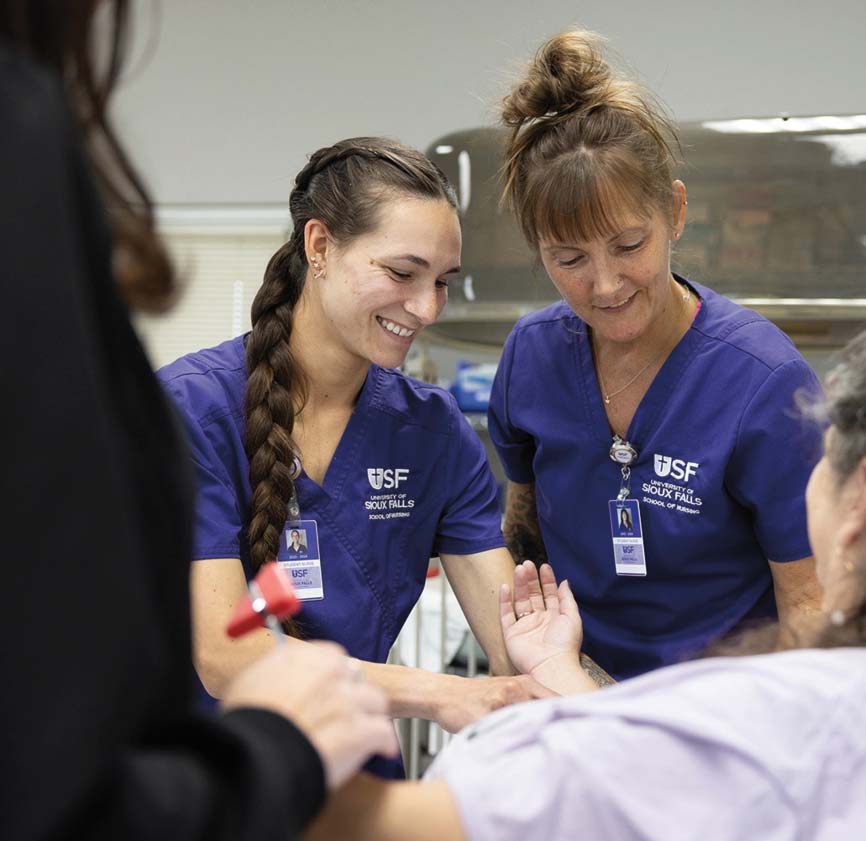
One of the most pressing workforce challenges is the need for more nurses. Dakota Wesleyan University’s new two-year nursing program was created with that urgency in mind: helping students enter the profession more quickly while maintaining a strong emphasis on hands-on preparation. Clinical partnerships throughout the Sioux Falls area give students experience across a variety of healthcare settings while strengthening connections between future graduates and local employers.
“These partnerships are critical to ensuring students gain exposure to different populations and care settings while also supporting our workforce pipelines for our healthcare partners,” said Penny Tilton, Administrative Chair of Nursing.
As patient needs become more complex, demand is also growing for specialized providers. Mount Marty University’s Certified Registered Nurse Anesthetist (CRNA) program helps address that need by preparing advanced practitioners for critical anesthesia roles. Through simulation-based learning, students develop not only technical expertise but also the communication, decision-making and critical-thinking skills required in high-pressure clinical environments.
Healthcare leaders increasingly recognize that quality patient care depends on effective collaboration across specialties. South Dakota State University’s Metro Center is designed with that reality in mind. After nearly three decades of operating medical programs in separate Sioux Falls locations, SDSU is creating a centralized home for its health sciences programs, located between the region’s major health systems.
“It also brings the students and faculty from different health sciences together for collaboration, like what would happen in healthcare environments,” said Vernon Brown, Associate Vice President for External Affairs.
Beyond fostering collaboration, the Metro Center will expand enrollment by 40%, growing from 165 to 237 students and helping address the region’s critical workforce needs.
Together, these efforts reflect a commitment to strengthening the healthcare workforce pipeline. By
expanding capacity, creating hands-on learning opportunities and preparing students for collaborative care environments, local institutions are helping meet future healthcare demands.
Turning Knowledge into Workforce Readiness
Preparing students for the workforce means more than teaching technical skills. As workforce needs have evolved, technical education, applied learning and industry partnerships have become increasingly important pathways into high-demand careers.

That shift is reflected at Southeast Technical College, where hands-on learning serves as the foundation of many programs. “Each program is supported by an industry advisory board that provides ongoing input on curriculum, skill needs and emerging trends,” said Cory Clasemann, President of STC.
The recent expansion of the Abdnor Center reflects growing demand for technical careers and provides additional space for training in fields such as automation and maintenance technology, where employers continue to face workforce shortages. Designed to mirror industry environments, the facility allows students to move seamlessly between instruction and practical application, building the confidence and experience needed to contribute from day one.
Applied learning is also becoming increasingly important at four-year institutions. At Augustana University’s Rydell School of Business, students connect with employers through internships, consulting projects and mentorship opportunities designed to bridge the gap between the classroom and the workplace.
Programs such as the Leadership Academy pair students with industry mentors and business leaders, helping them expand their professional networks while gaining insight into a variety of career paths. These connections often lead to internships, employment opportunities and long-term relationships that benefit both students and the Sioux Falls business community. Today, 60% of Augustana graduates work in Sioux Falls, helping strengthen the region’s
workforce pipeline.
The same emphasis on applied learning extends to technology and research. As Sioux Falls diversifies its economy, demand is growing for talent in fields such as cybersecurity, artificial intelligence and software engineering. Meeting those needs requires opportunities to tackle real-world challenges before entering the workforce.
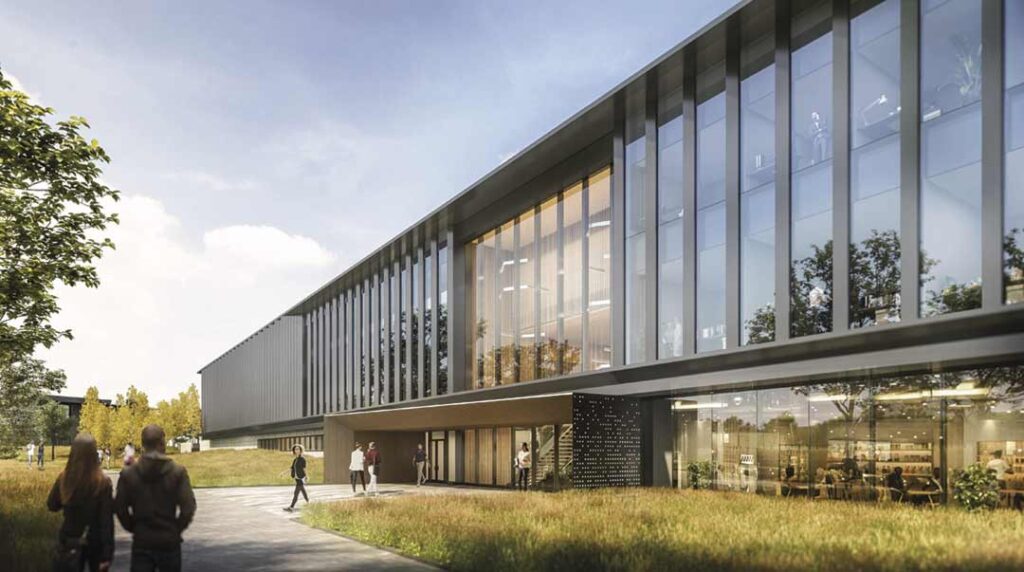
DARC, the Dakota State University Applied Research Corporation, helps create those opportunities by connecting Dakota State University students, graduates and researchers with industry and government partners. Through research projects, participants gain hands-on experience while contributing to solutions for complex technology challenges.
“These experiences help individuals develop technical skills, problem-solving abilities and professional experience that cannot be replicated solely in a classroom setting,” said Stacy Kooistra, COO and General Counsel of DARC.
Historically, many technology graduates left South Dakota in search of opportunities elsewhere. Organizations such as DARC are helping build an innovation ecosystem that allows talent to develop and remain in the state, supporting both emerging industries and long-term economic growth. DARC is expected to move into the DSU Sioux Falls Applied Research Lab in late summer 2026.
The Next Stage of Talent Development
Building a strong workforce is about more than preparing students for their first jobs. As industries evolve, continuous learning has become essential for career growth and workforce development.
Higher education institutions are helping meet that need by creating flexible programs that allow working professionals to continue learning without stepping away from their careers. At the University of South Dakota, the Executive MBA program helps professionals strengthen skills in leadership, analytics and management while preparing for greater responsibility within their organizations.
“USD’s Executive MBA program emerged out of conversations between USD Beacom School of Business leadership and business leaders throughout the Sioux Falls community,” said Alissa Matt, Assistant Vice President for Marketing & University Relations. “It was apparent that there is a need for executive-level education in the city, and the eMBA was developed collaboratively to meet that need.”
Professional development extends beyond traditional degree programs. Through its Center for Workforce Development, the University of Sioux Falls partners with employers to create flexible training and educational pathways that help employees build new skills throughout their careers. From certificates and associate degrees to online programs and professional development opportunities, the center offers options designed for working adults seeking to upskill, reskill or advance within their organizations. The approach reflects a growing reality for employers and workers alike: learning is no longer limited to a four-year degree but is an ongoing part of career growth and workforce development.
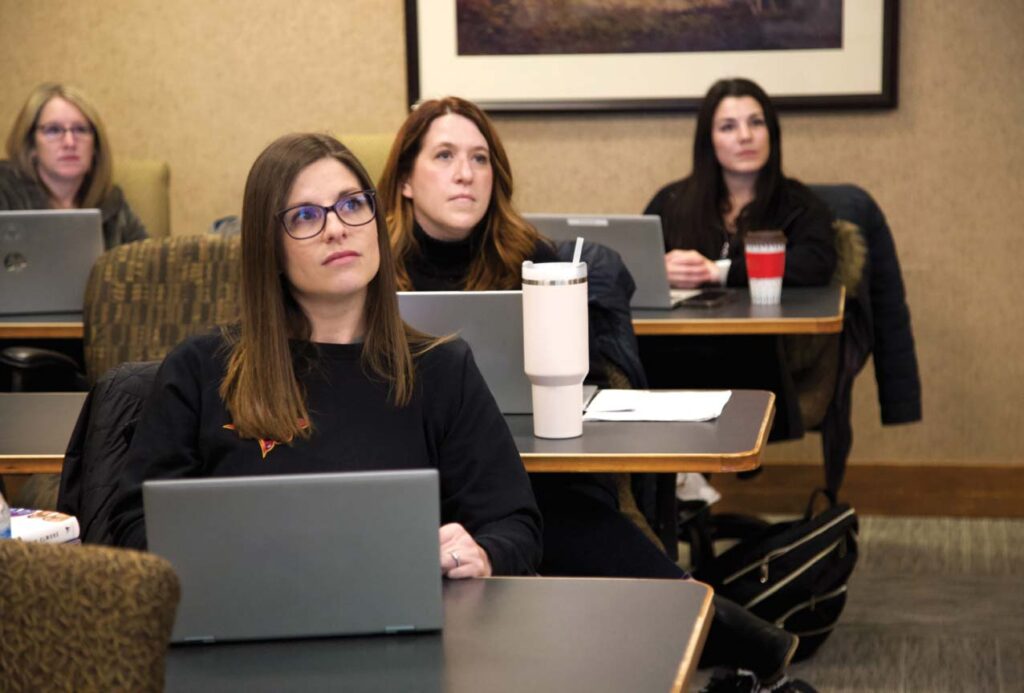
These programs reflect a broader shift in workforce development. Learning is no longer confined to a specific stage of life. As Sioux Falls continues to grow, developing talent through continuing education will remain just as important as attracting it.
Retaining Talent Through Opportunity
Workforce development is about more than jobs and training programs. At its core, it is about creating opportunities for people to learn, grow and succeed. Meeting that challenge requires collaboration among employers, educational institutions and community organizations.
The Sioux Falls Development Foundation plays an important role in bringing those partners together, helping align workforce development efforts with the region’s current and future needs.
“As important as it is to recruit for the jobs employers have open right now, we also have to build the systems, partnerships and student experiences that prepare people for the jobs our employers will need to fill tomorrow,” said Denise Guzzetta, Vice President of Talent and Workforce Development at the development foundation.
That work extends beyond preparing people for careers. Talent is more likely to stay when individuals can envision a future in Sioux Falls that includes professional growth, community connections and a high quality of life. Creating that environment requires the same collaborative spirit that drives workforce development itself.
As Sioux Falls continues to grow, its success will depend not only on attracting talent but also on developing and retaining it. The partnerships taking shape today are doing more than filling workforce needs. They are helping build the workforce that will support the region’s next chapter of growth.