
Design that Champions Mental Health: Seeking Support without the Stigma

The Greater Sioux Falls Chamber of Commerce is proud to feature our Connector Members—key collaborators committed to fostering meaningful relationships and building a vibrant business community. Connector tier members are instrumental in creating a strong network within Sioux Falls, bridging connections among businesses and community leaders. Through their active engagement, they support initiatives that uplift our city while developing their teams and strengthening partnerships.


AIA, Principal Architect | JLG Architects
What if the spaces where we work, learn, and heal could help us breathe easier, think more clearly, and feel more supported, both physically and emotionally? Right now, hospitals, schools, emergency services, workplaces, and college campuses share this priority: a hyper-focused need to find new and innovative ways to support the whole person through mental health resources and physically healthier spaces. Thanks to wonderful partnerships, cross-industry collaborations, and ongoing education, new resources and environments are emerging — inviting us to slow down, take a deep breath, and feel comfortable enough to seek support without the stigma.
A Monumental Movement
Before the pandemic, mental health was rarely a central consideration in the design of workplaces and public spaces. Traditionally, we were encouraged to keep our personal struggles separate from our professional lives. However, the global crisis blurred those boundaries, forcing organizations to recognize that employees and students bring their whole selves—challenges and all—into every environment. As collective stress and anxiety rose, so did the urgent need for spaces that offer relief and restoration in our daily routines.
This shift gave rise to the concept of “respite rooms”— dedicated areas designed to provide a safe haven for decompression and reflection. While it’s difficult to pinpoint exactly where respite spaces originated, their emergence is rooted in overlapping movements within healthcare and workplace design.
Essential Architecture
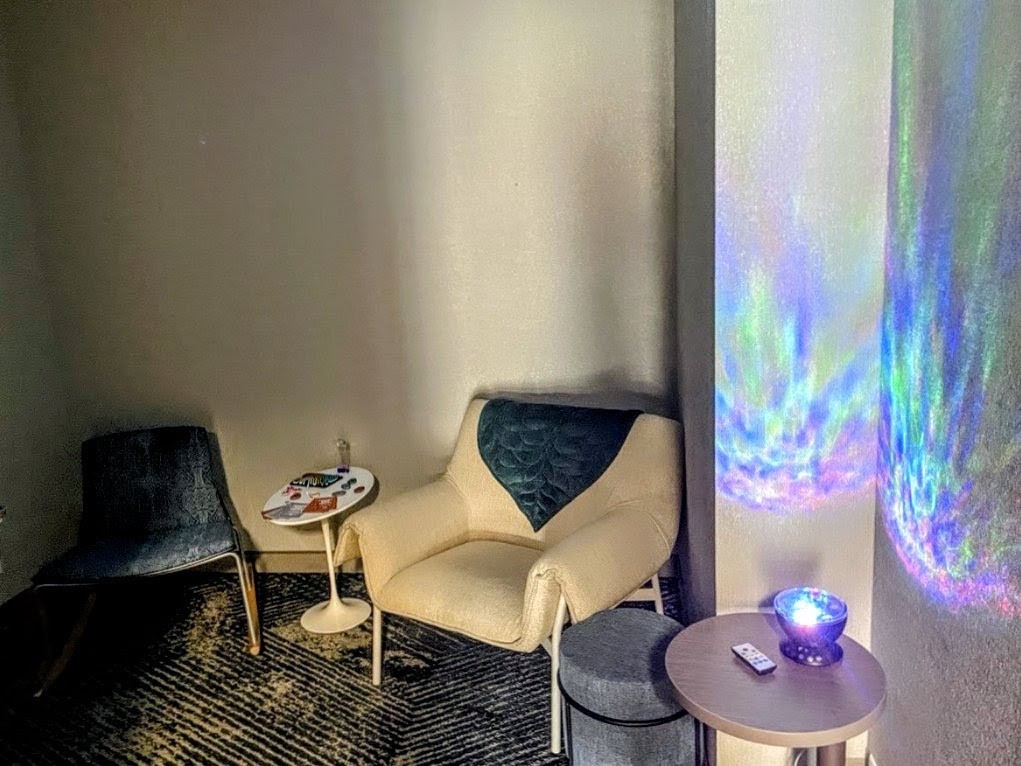
In the post-pandemic world, supportive environments like respite rooms have become essential, helping to reduce burnout, foster well-being, and accommodate a broad spectrum of needs. Through thoughtful architectural strategies, we’ve learned that we can champion mental health through the creation of neuroinclusive environments that holistically care for the whole human.
JLG’s team has had the honor of designing a multitude of respite rooms for healthcare, workplaces, schools, and most recently, within a hotel auxiliary space at the Summit League Basketball Championship in Sioux Falls, SD. Through a partnership with Sanford Health and Holiday Inn City Centre, the “Zen Zone” became the student-athletes’ personal retreat, helping moderate stress at the height of competition through the therapeutic layering of light, sound, and texture.
Small Space, Big Impact
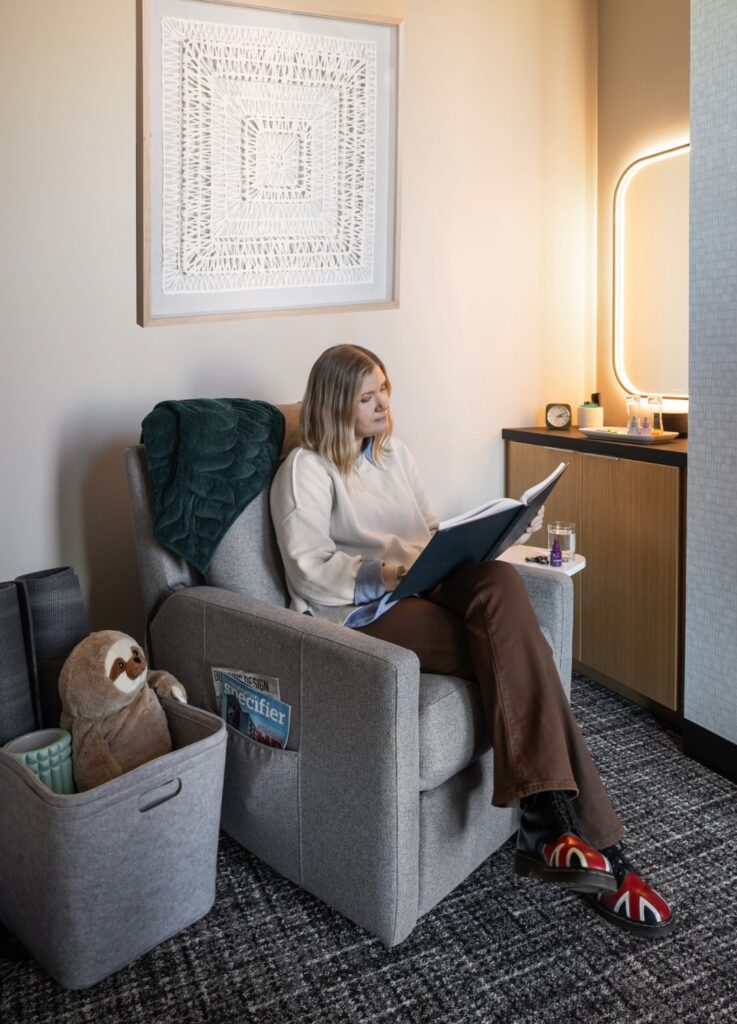
Creating a respite room, not unlike the ones in several of our offices and throughout regional hospitals and schools, is not all that complex. In fact, this is the kind of space that is replicable nearly anywhere with 150–300 square feet to spare. Privacy is the most important aspect to ensure people feel comfortable enough to use the room.
When creating a respite room, we lean into the principles of Trauma-Informed Design, considering the necessities to be a quiet or soundproof room with soft, dimmable lighting, comfortable and flexible seating options, and biophilic elements like living plants or nature imagery. We’ve also included guided meditation audio, breathing and mindfulness cards, yoga mats, weighted blankets, and a variety of other stress relief tools.
These neuroinclusive, sensory-sensitive spaces are open to interpretation; a place to pray or meditate, cope with a challenging personal situation, take a private call, recharge after a stressful scenario, decompress from sensory overload, or simply find reprieve from a headache or other ailment.
Workplace Well-Being
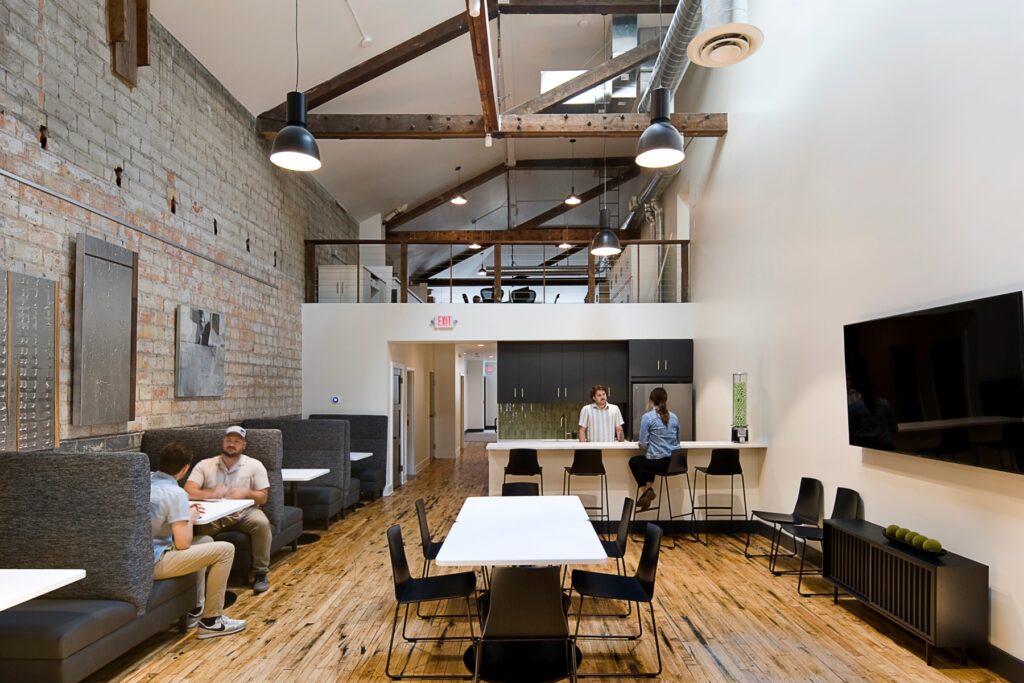
Beyond respite rooms, we use wellness-based design to transform work environments like First International Bank & Trust in Sioux Falls. This is a beautiful example of prioritizing the health and happiness of employees and community, not just a corporation. Here, we brought the outdoors indoors with a combination of warm walnut wood, glass enclosures to maximize daylight, a Venetian plaster fireplace and “living room,” a club room, and an outdoor patio/grill station that extends from the breakroom.
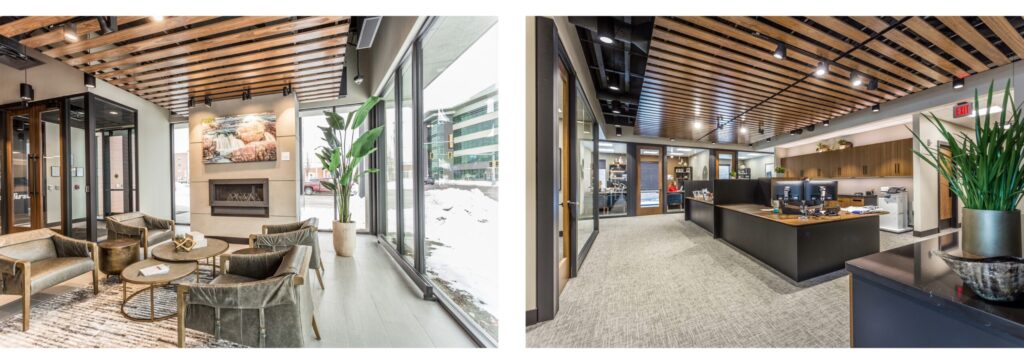
Today, it’s about creating a destination where people want to be, not have to be — a place that cares for its employees and builds connections with its community. As JLG’s Principal Architect and Workplace Expert, Tracy Jordre notes, “Designing for well-being is no longer a luxury in modern environments — it is an essential reflection of how deeply we understand the human experience. In a world defined by constant stimulation, pressure, and emotional fatigue, people need spaces where they can briefly step away, regulate, breathe, and return with dignity. The most effective environments today are not just designed for productivity or performance; they are designed to support recovery, well-being, and the reality that being human can sometimes be overwhelming.”
Nurturing Our Nature
For Todd Medd, JLG’s Healthcare Studio Leader and co-founder of the 4-6-3 Foundation, recognizing the impact of mental health is a personal and professional mission that starts with breaking the silence. “As a society, we have been trained to ignore or minimize the effects of mental health disorders, and it’s devastating. We have to speak up and acknowledge the signs, solutions, and importance of mental health management at home, in schools, and in the workplace. We have to create safe spaces that show support for those around us because sometimes the warning signs are difficult to see.”
Ultimately, there is a growing need to create spaces that care for us outside of the home, whether at work, in clinical environments, or on campus. To nurture our nature and support stigma-free self-care, we must make room for well-being, inviting humans to be genuinely human.
