
Jerry Schmitz Honored as 2026 Agribusiness Citizen of the Year
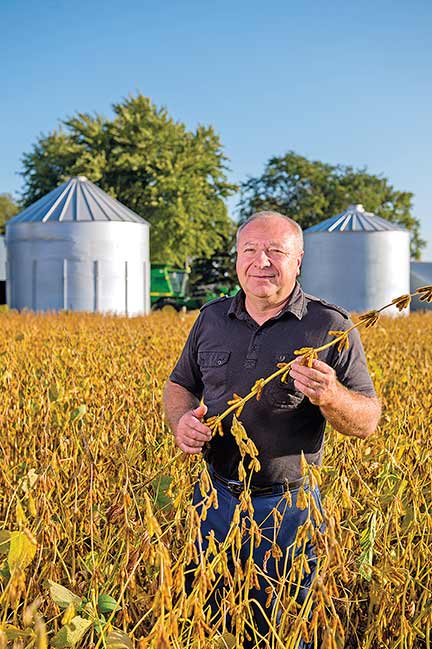
As a founding member of the South Dakota Soybean Association, Jerry Schmitz recognized early on the importance of producers standing up to promote soybeans in the state in the early 1980s.
That early involvement grew into a leadership role with lasting impact that has not gone unnoticed. Schmitz has been selected as the 2026 Agribusiness Citizen of the Year by the Agribusiness Division of the Greater Sioux Falls Chamber of Commerce.
He grew up on a farm near Elk Point, S.D., before graduating from South Dakota State University with a degree in agricultural education. After graduation, he and his wife, Sally, moved to their farm near Vermillion, S.D., where they farmed for 40 years.
As a recent graduate and young farmer in 1980, Schmitz attended a co-op meeting where a speaker from the American Soybean Association posed the question: How would you like to grow a crop where, rather than always chasing the next best option, you focus on improving that crop through research and selling it to the world?
“That really grabbed my attention, and the gentleman called me back about a week later and said, ‘Why don’t we start an association in South Dakota?’” Schmitz said.
He and two other farmers started a soybean association in South Dakota soon after that meeting by gathering names of farmers from county agents and renting telephone space in an ambulance barn in Elk Point.
“We just started calling farmers. We explained what the association was, and at that time rail service was being shut down in South Dakota. A number of railroads just didn’t see the economic value, so that was one of the issues we thought needed to be addressed,” he said.
The growth of the association in the state moved quickly, with Schmitz being elected the first president of the South Dakota Soybean Association and later being elected national director for the American Soybean Association. He served on the association board until the mid-1980s, when he and his wife decided to start a family.
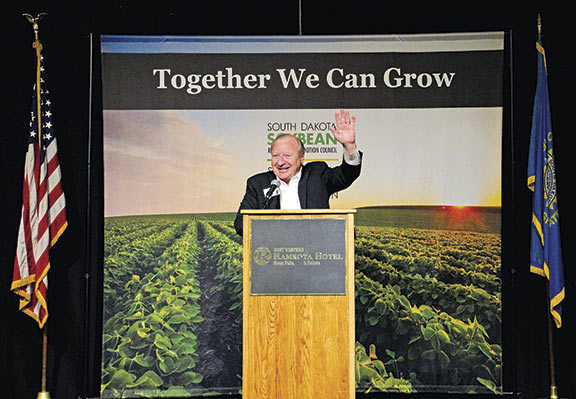
Schmitz became re-engaged in the association in 2017. Now in his seventh year as executive director of the South Dakota Soybean Association and the South Dakota Soybean Checkoff, Schmitz is looking forward to retirement in 2026. He and his wife built a new home a few miles from the farm, where their son is now farming.
In his role as executive director, a key issue Schmitz and the association have worked on recently has been tariffs. He noted that national and state organizations have been effective in getting their concerns expressed to President Donald Trump, as well as through headline news outlets and the television talk show “The View.”
“We were all effective together in getting our message out. That’s pretty important, not only for families in South Dakota, but for the economy of our state and the United States,” he said.
On the checkoff side, they recognize China as a huge market for U.S. soybeans, but Schmitz said diversification is needed — not only in supplying soybeans and meal to other countries, but also in exploring opportunities within the United States through feed and other products developed through checkoff-funded research.
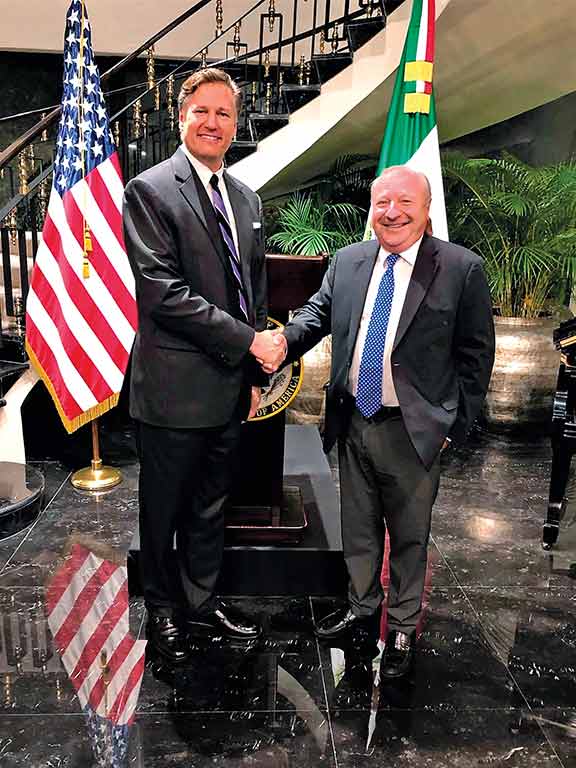
The checkoff was created by a congressional bill in 1990. Schmitz said the checkoff board cannot engage in policy, while the association can address policy issues and work alongside the checkoff. The United Soybean Board determined that states would collect funds and forward one-half of what they collect to the national level.
In Schmitz’s view, soybean production is critically important to South Dakota. From the sale of soybeans alone, he estimates $2 billion to $3 billion in raw income annually. That figure does not include the added value of soybean oil and meal or the value those products bring to livestock production.
“It’s used more and more as the protein of choice because of the essential amino acid complex that it has,” Schmitz said. “It actually has all of the essential amino acids that animals, including humans, require for bone and muscle strength.”
With agriculture and soybean markets operating on a global stage, having the association and checkoff offices in Sioux Falls has been beneficial, he said, as they work with more than 30 organizations, including the U.S. Soybean Export Council, the U.S. Meat Export Federation and the South Dakota Pork Producers Council. Many of those organizations fly in and out of Sioux Falls, making the location convenient for meetings. They also host multiple international trade teams throughout the year.
“It is helpful, especially if they have some time on their hands, that they can stop by and we can talk about what we do in South Dakota and what we can do to help them,” Schmitz said.