
5 Questions with Ryan Budmayr
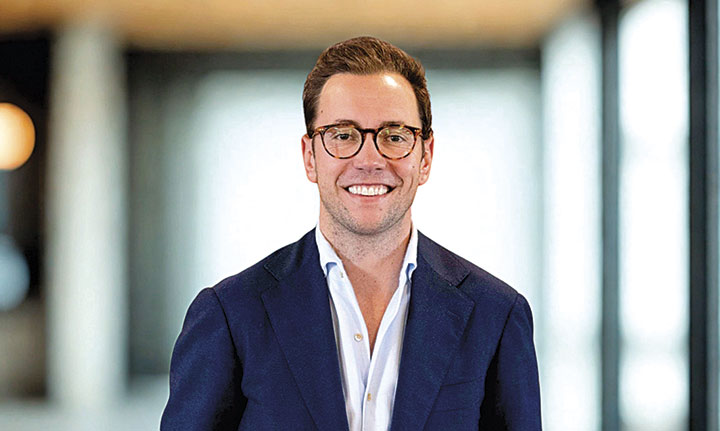
Ryan Budmayr is President and CEO of the South Dakota Chamber of Commerce & Industry, the primary statewide advocate for South Dakota’s business community. Before joining the State Chamber, he has held a variety of roles in public service, economic development and marketing, most recently serving as vice president at Lawrence & Schiller, Inc. Ryan lives in Sioux Falls with his wife, Molly, and their two kids — Minnie, 8, and Teddy, 6. When he’s not shuttling them to activities, he enjoys golfing and hunting with family and friends.
1. How did your background and upbringing shape the path you’re on today?
I was born and raised in Belle Fourche, SD, where my family homesteaded more than a century ago. That upbringing instilled in me the South Dakota values of hard work and community that still guide me today. After high school, I attended the University of South Dakota, then joined Governor Dennis Daugaard’s campaign and later his staff in Pierre. My career has centered on politics, economic development and marketing.
2. What part of taking this role excites you the most?
For nearly three decades, David Owen served as the leader of the South Dakota Chamber of Commerce & Industry, championing the state’s business community
with unmatched wit and dedication. David is both a friend and mentor to me and I’m excited to carry forward his legacy. It is our generation’s turn to roll up our sleeves and build a future that ensures opportunity for our children and grandchildren. We must maintain a stable, business-friendly environment that allows second- and third-generation companies to flourish and continue anchoring our communities. Simultaneously, we must attract innovative industries that enable young people to return to rural communities and contribute to their vitality. Our cities and towns are filled with young leaders who are stepping up every day and I’m excited to join them.
3. The State Chamber serves as the central vessel of advocacy for the business community in South Dakota. What are some of the opportunities and challenges that come along with that?
As I travel across the state to begin engaging with community and business leaders, virtually all of them want the same thing: to leave South Dakota better than when they found it and ensure the state remains the premier place to live, work and raise a family. They’re looking for a balanced approach that empowers existing companies to thrive while actively recruiting new opportunities from beyond our borders. They understand the importance of growing our economy while continuing to preserve the South Dakota way of life. We’re lucky to have such great leaders across our state and I’m blessed with the opportunity to work on their behalf.
4. What will be some of the biggest priorities of the State Chamber when it comes to advocacy?
South Dakota’s prosperity over the past half-century was no accident. It was forged through the collective efforts of community leaders and neighbors uniting for the common good, always with an eye toward the next generation. There will be important issues that we’ll face in the short term — property taxes, data centers, energy generation and more. While we don’t know the specifics of these issues yet, we will continue to advocate for the same things that made South Dakota such an enviable place to live and do business: lower taxes, less regulation and a workforce that’s second to none.
5. What opportunities for collaboration have you already taken advantage of in your time at the State Chamber, and where are some other partnerships you would like to explore?
South Dakotans know how to come together — whether branding calves for a neighbor or stacking sandbags along the Missouri River. The State Chamber may be small in staff, but we amplify our impact through strong partnerships. Our board of directors, local chambers of commerce, statewide associations and government agencies all step up with expertise and support. I’m continually impressed by these collaborations and look forward to deepening them while exploring new ones with education, workforce, and innovation leaders across the state.