Looking to History: Who Will Lead the Next Revolution?
Historians put the Annual Meeting theme of revolution
in perspective
The Greater Sioux Falls Chamber of Commerce Annual Meeting returns Oct. 13, and this year’s theme, Revolution, explores the people, ideas and moments that challenge the status quo and shape what comes next.
To help set the stage, we invited two South Dakota historians — David Kenley, PhD, professor of history and cyber leadership at Dakota State University, and Benjamin F. Jones, PhD, state historian and director of the South Dakota State Historical Society — to take a broader look at revolution. Their reflections trace the idea from the American Revolution and the changes it set in motion to the ways Sioux Falls has repeatedly reinvented itself through growth, innovation and opportunity.
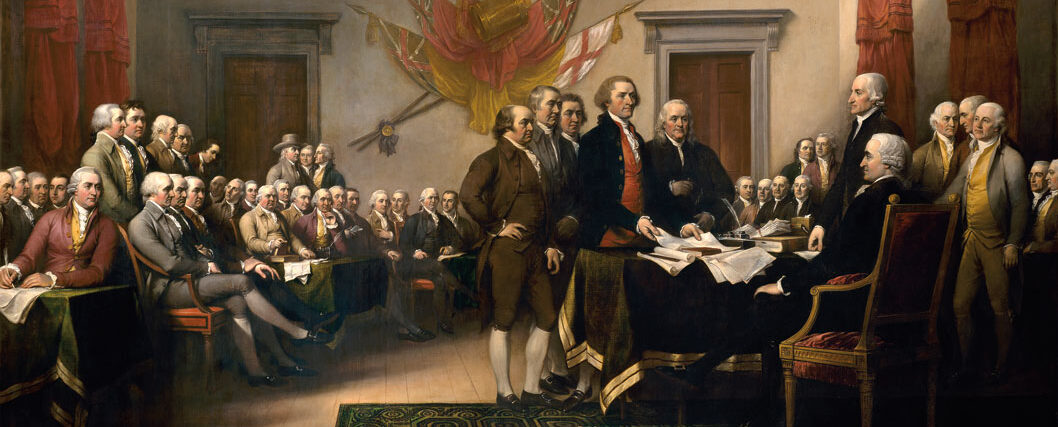
Across the country, Americans have just concluded a summer of celebration commemorating the 250th anniversary of the Declaration of Independence. Millions have been the beneficiaries of the sacrifices and remarkable vision of the nation’s founding fathers and mothers. Yet, between the fireworks and barbecues, it is worth remembering exactly what is involved in a revolution — and, in particular, the American Revolution.
Revolutions involve significant social, cultural, economic and political change, often at a terribly bloody and violent cost. Certainly, that describes the events that unfolded across the American colonies during the 1770s. What eventually emerged was an independent republic based upon representative government, an electorate that would gradually expand and constitutional guarantees of individual liberties.
But revolutions involve far more than political change. Economic concerns were also enormously important to the American colonists. Most Americans know the phrase “no taxation without representation.” Most have heard of the Boston Tea Party, which challenged both parliamentary taxation and the privileged position of the British East India Company. The Royal Proclamation of 1763, which restricted settlement west of the Appalachian Mountains, also angered colonists who saw western lands as important to their economic futures. In short, many critics of British rule were motivated by economic concerns as well as political principles.
As Americans celebrate the 250th anniversary of the Declaration of Independence, it is also worth remembering that the revolutionary process continued long after the ink dried in Independence Hall. Fighting against Britain continued until 1783. The Constitution was drafted in 1787 and ratified in 1788. The Bill of Rights followed in 1791.
Americans persisted in challenging inherited political structures well into the 19th century. Voting rights expanded to include most white men regardless of property ownership. The 15th Amendment, ratified in 1870, prohibited denying voting rights on the basis of race, although that promise remained unfulfilled for millions of Black Americans for generations. Even in the 20th century, the 19th Amendment extended constitutional voting protections to women in 1920, and the 26th Amendment lowered the voting age to 18 in 1971.
The revolutionary impulse also contributed to dramatic economic changes. Visionaries built canals that linked previously isolated regions, the National Road extended westward from Maryland to Illinois, and eventually railroads knitted much of the country into a vast economic market. The Civil War — perhaps as revolutionary as the War for Independence — destroyed slavery while transforming not only the nation’s political and social structures, but also the economic foundation of the South and, to a lesser degree, the entire nation.
And it is worth remembering how these same forces shaped communities closer to home. The men and women who came to the northern plains were themselves rejecting the status quo. They left established communities behind, endured tremendous hardship and sometimes terrible violence, and took enormous risks to build something revolutionary. This came with enormous cost to the Dakota, Lakota, Ponca, Crow, Cheyenne, Arikara and Mandan peoples already living on those lands. The society that emerged on the prairie was new in its political, social, cultural and economic character.
In its most basic form, revolution is about refusing to assume that tomorrow must look like yesterday. Revolutionaries challenge inherited assumptions. They innovate. They imagine different political, cultural, social and economic possibilities.
That was certainly shown by the first residents of Sioux Falls. Drawn by the falls, the connecting attributes of the river and the hope that drives all revolutions, two groups of people came from Minnesota and Iowa to set up a town site. Collaborating in order to succeed, they found themselves in Dakota Territory when the borders of Minnesota and Iowa were set to the east.
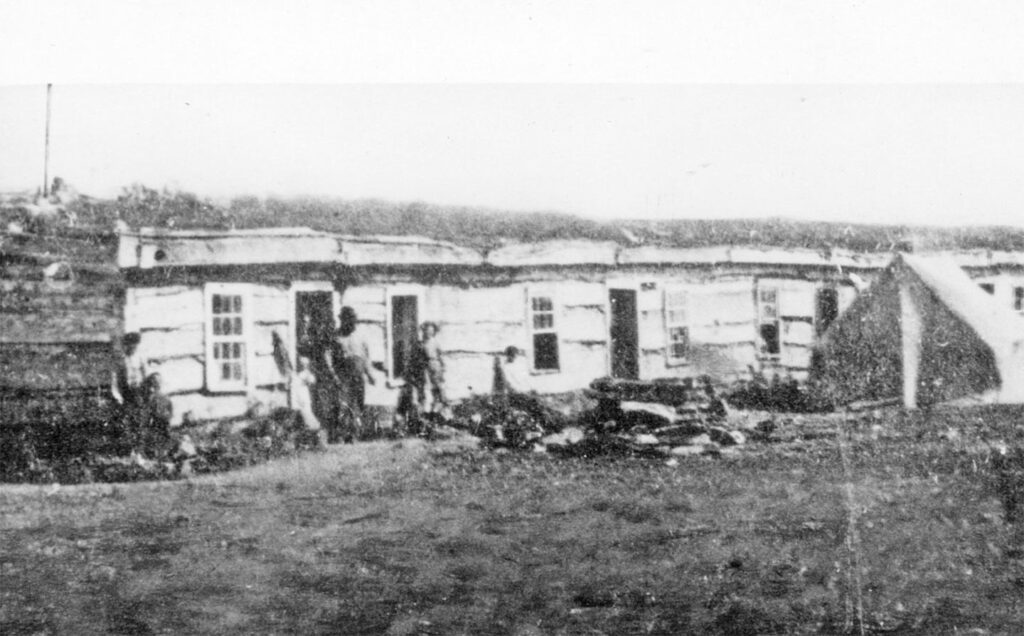
Tragically, prompted by corruption and malfeasance in Minnesota, a number of Dakota lashed out while the Civil War raged back east. These events prompted nearly all in Sioux Falls to depart in the late summer of 1862. But as the Civil War ended and Dakota Territory took shape, settlers returned in 1865 and rebuilt the city.
Building upon established American Indian trade in corn, furs, pottery, quartzite and catlinite along routes that had existed since the time of the Roman Empire, Americans now developed routes for grain, livestock and manufactured goods..
With a booming population producing more grain, Sioux Falls attracted railroads, and the first train arrived in August 1878. The railroad subsequently donated the land site that convinced the territorial legislature to build the state penitentiary in Sioux Falls in 1881. With grain, livestock, quartzite, investors and connections to the river and railroad, the population reached 10,000 by 1900. That started a tradition, as the city’s average annual growth rate has regularly been 2% or better ever since.
The arts and outdoors were also important to early residents. By the 1920s, the city and its two colleges fostered orchestras, bands, theater, literary societies and a number of city parks, while residents embraced revolutionary new jazz music and welcomed Duke Ellington, among others, to perform here.
The exception to steady growth was in the 1960s and 1970s, when interest rates and other factors depressed agricultural markets and made it hard for farmers and ranchers to get access to credit and for people to purchase homes and automobiles. One bright spot was the city’s determination to attract the new Earth Resources Observation and Science Center (EROS) just north of Sioux Falls. Like the railroads had in the 1880s, city leaders promised to provide the land, which helped attract the project.
Nevertheless, the hard times persisted. Realizing something had to change, leaders worked to find solutions, prompting a revolution of a different kind. Driven by high interest rates, the state legislature allowed rates to float with the market at a time when states had far more authority over banking than Congress. Simultaneously, seeking relief from laws restricting rates in New York, Citibank made the case for an opportunity to bring its stifled credit card operation to town. Seeing the opportunities, South Dakotans and Sioux Falls bankers acted with alacrity and invited Citibank to town, starting a new industry in the early 1980s.
But this new industry needed computational know-how. So again, the situation called for another revolution, and higher education responded with a greater focus on graduating students with this vital knowledge.
Just as importantly, investors and risk takers led the way with a new revolution in philanthropy built upon their incredible newfound capacity to give. Within a mere two decades, hundreds of millions of dollars in gifts were committed to health care, education and the arts in ways that have drawn more and more people. Clearly, those who had benefited from these changes in the 1980s recognized the need to give back, and they were unafraid of revolutionary change that could improve people’s lives.
That same willingness to organize around a shared vision has continued through the Greater Sioux Falls Chamber of Commerce and, since 1987, Forward Sioux Falls. Created as a joint venture of the Chamber and the Sioux Falls Development Foundation, Forward Sioux Falls has brought business and civic leaders together to identify priorities, invest in long-term growth and support economic development, workforce, health care, technology and quality-of-life initiatives across the region.
Taking its cue from the nation’s founding generation, unwilling to rely on others to solve its greatest challenges, Sioux Falls has seized opportunities and revolutionized its economy.
Who will lead the next revolution?